Chasing the
Northern Lights
Your complete luxury guide to witnessing nature's greatest light show, from the fjords of Norway to the lava fields of Iceland and the magical snow forests of Finnish Lapland.
The Sky Comes Alive and You Have to See It!
No photograph fully captures what it feels like to witness the Northern Lights in person. You really just have to see it for yourself.
This guide covers three aurora destinations, each with its own personality: Tromsø with its steep fjords, Iceland with its lava fields and black sand, and Rovaniemi with its snow-heavy pine forests, where Santa happens to keep an office.
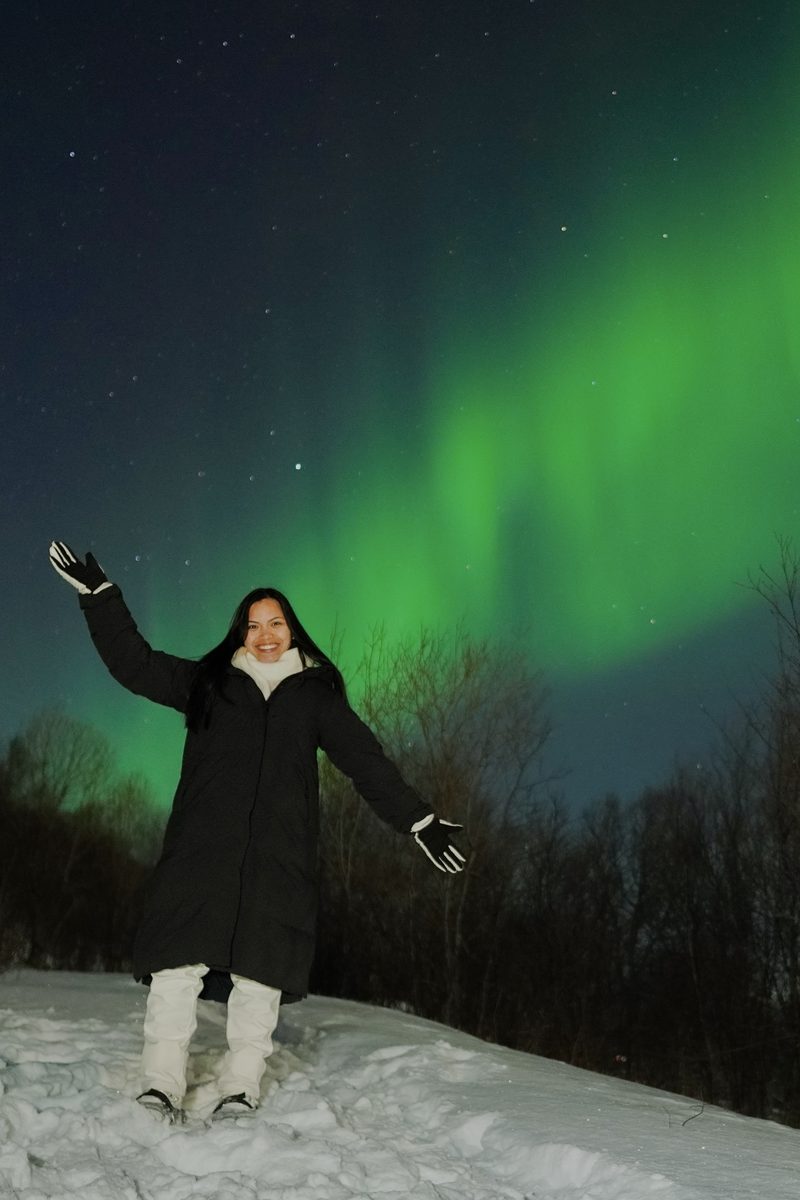
Tromsø, Norway
I've Been There, and I'll Get You There Too
Standing under the Northern Lights for the first time is something I still struggle to put into words. One moment the sky is dark and still. Then the lights appear, and the whole horizon starts to move.
I have been lucky enough to chase the aurora three times now! Iceland in January 2024, Norway in December 2024, and Finland in November 2025. Every single trip has blown me away in a completely different way. Iceland's glacier beaches, Norway's dramatic fjords, Finland's snow-covered forests... there is truly no wrong choice here.
Along the way I've picked up so much: how to read a cloud forecast at midnight, which hotels will actually wake you up when the lights appear, and why you should always bring an extra camera battery (trust me on that one!). I've packed everything I know into this guide, and I'm so excited to help you plan your own aurora adventure!
Tromsø
Norway's arctic capital, perched above the Arctic Circle on a small island between towering fjords. With more dark hours than almost anywhere on Earth and exceptional aurora frequency, Tromsø is the classic first stop for serious lights hunters.
Why Tromsø
- 200+ nights of potential aurora activity per year
- Clear of clouds more often than Iceland (drier microclimate)
- Easy boat excursions into open fjords away from city light
- Midnight Sun in summer; polar night Nov–Jan
- Compact, walkable city with excellent infrastructure
Luxury Hotels
- Clarion Hotel The Edgeharbor-view rooms, acclaimed breakfast buffet, skybar on the 11th floor, and a prime central location steps from aurora excursion pickup points
- Scandic Ishavshotelaward-winning waterfront hotel with panoramic fjord views, outstanding breakfast buffet, and a prime quayside location
- Tromsø Lodge & Campingcozy riverside cabins just outside the city with dark skies perfect for aurora viewing right from your deck
- Lyngen Northglass igloo pods with 180° panoramic views of the Lyngen Alps and fjord, purpose-built for aurora watching
Best Viewing Spots
- Telegrafbukta beach, with a dark, open horizon, mirror-still reflections
- Fjellheisen cable car summit (421m elevation)
- Ersfjordbotn village, just a 30 min drive away, near-zero light pollution
- Boat tours on the fjord where expert guides follow the forecasts
- Svensby (Lyngen Alps) for a dramatic mountain backdrop
Iceland
The land of fire and ice offers aurora experiences unlike anywhere else, with glowing geysers, black sand beaches, and ancient lava fields as your backdrop. Iceland is also gloriously easy to road-trip, putting you in position to chase clear skies anywhere on the island.
Why Iceland
- Ring Road puts every landscape within reach by rental car
- Aurora paired with geothermal pools so you can bathe under the lights
- Dramatic settings: Jökulsárlón glacier lagoon, Snæfellsjökull
- Reykjavík has a surprisingly dark harbor viewpoint (Grótta)
- Self-drive freedom to chase clear sky windows in real time
Luxury Hotels
- ION Adventure Hoteldesign hotel built into an ancient lava field near Thingvellir, with a floor-to-ceiling Northern Lights bar, geothermal outdoor pool, and aurora wake-up service
- The Retreat at Blue Lagoonprivate lagoon access at midnight, low-slung architecture set into a lava field
- Hotel Rangáobservatory on-site, hot tubs outside every cabin, and staff who will wake you for the lights
- Black Beach Suitesstylish modern suites near Vík with picture-window views of Reynisfjara black sand beach and the Reynisdrangar sea stacks
Best Viewing Spots
- Þingvellir National Park, a UNESCO site with dark skies
- Jökulsárlón Glacier Lagoon where icebergs glow under the aurora
- Vík beach for the most incredible black sand and sea stacks
- Grótta Lighthouse in Reykjavík, accessible without a car
- Snæfellsnes Peninsula for remote western beauty
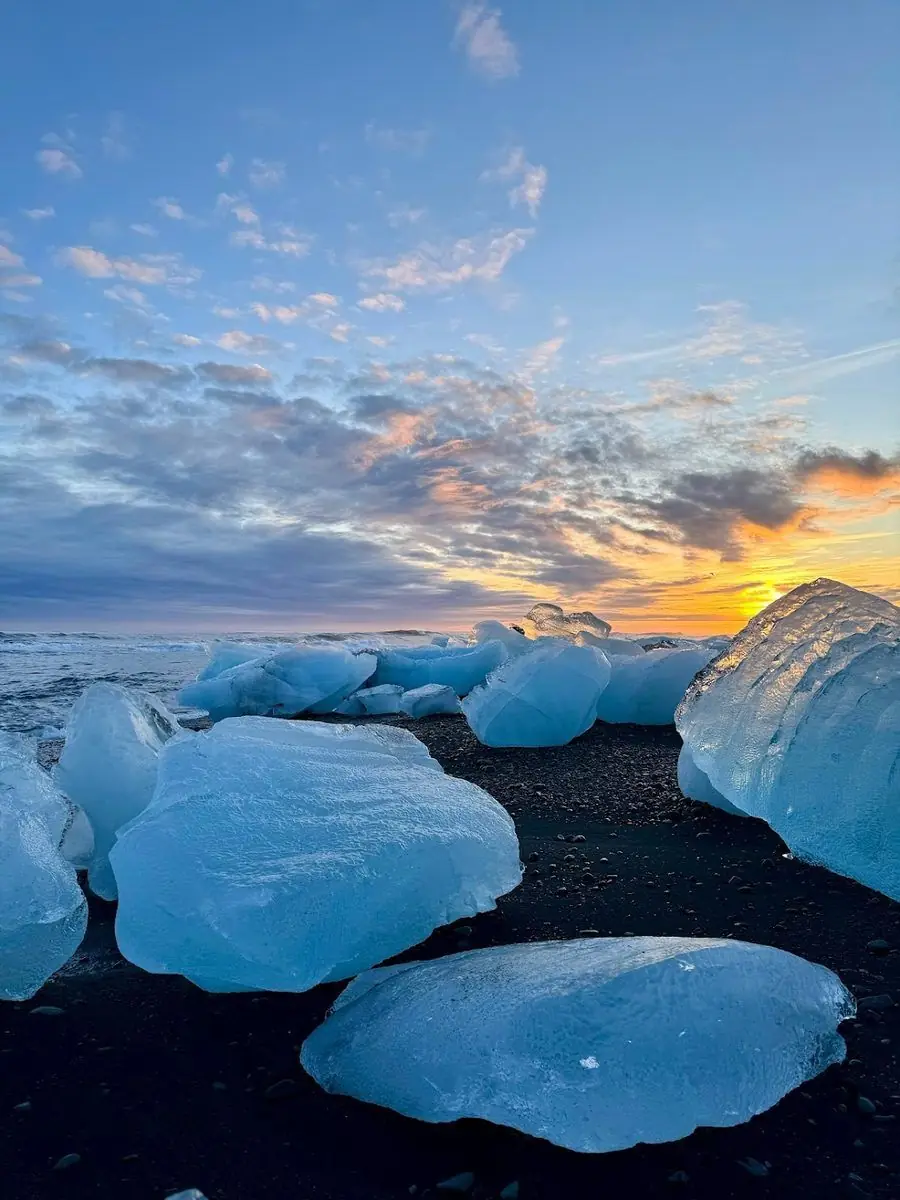
Diamond Beach, Iceland · glacial icebergs scattered on black sand at golden hour
Rovaniemi
The official hometown of Santa Claus sits right on the Arctic Circle, ringed by winter forest so quiet you can hear snow settle. Rovaniemi is where aurora hunting meets reindeer sleighs and snow-covered pines.
Why Rovaniemi
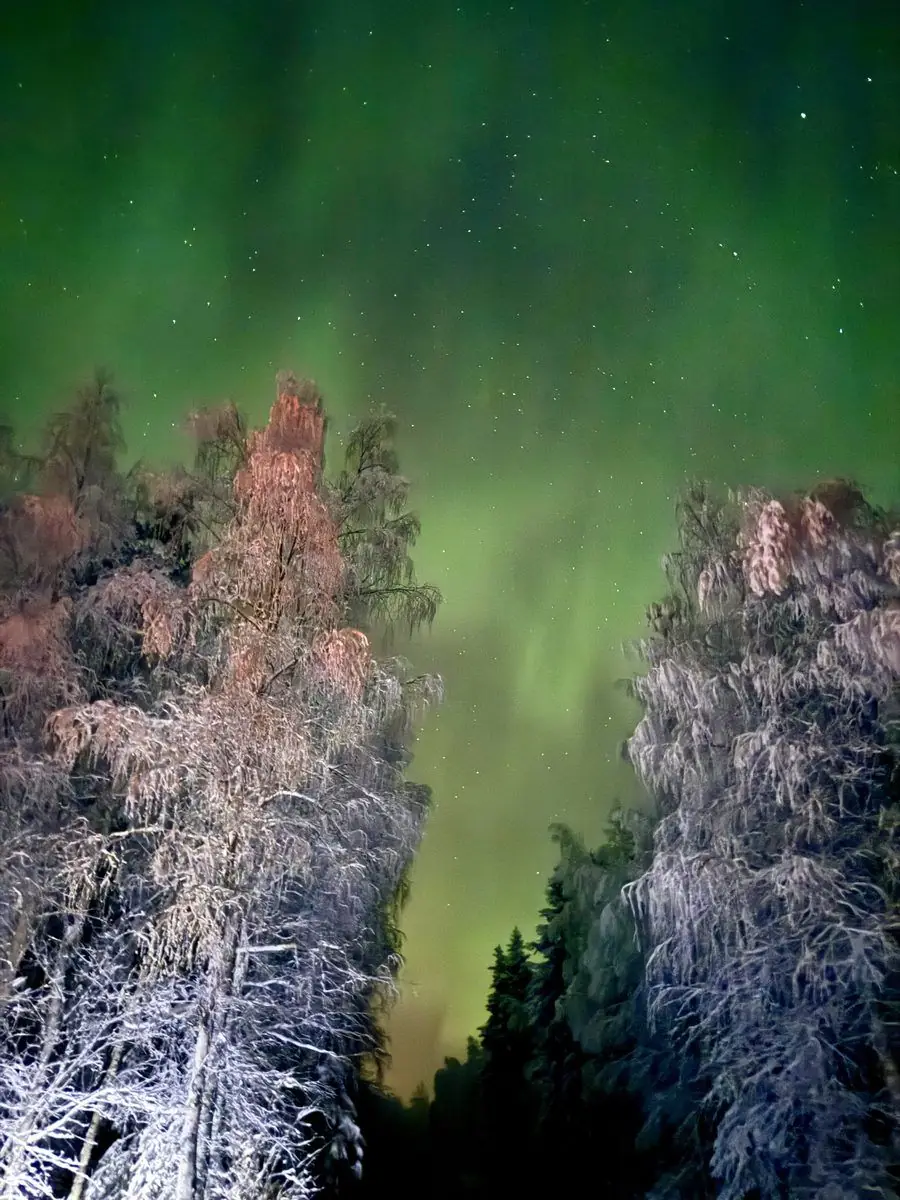
- Snow-covered forests create the most photogenic aurora framing
- Santa Claus Village adds a once-in-a-lifetime family dimension
- Glass-roofed igloos built for watching the sky from bed
- Exceptional combination of aurora + daytime winter activities
Luxury Hotels
- Arctic TreeHouse HotelMICHELIN Guide-listed luxury cabins in snowy Lapland forest with picture windows at the foot of every bed, private saunas, and an aurora alarm service
- Kakslauttanen Arctic Resortthe original glass igloo resort; thermal glass keeps the view frost-free
- Santa Claus Holiday Villageaurora cabins with private hot tubs, directly on the Arctic Circle
- Arctic Light Hotelboutique urban design hotel with premium aurora packages
Best Viewing Spots
- Ounasjoki Riverbanks with wide open sky above slow black water
- Sirkka / Levi Fell, just an easy 1-hour drive to ski resort darkness
- Saariselkä, a wilderness village with zero light pollution
- Any snowmobile tour guide will take you to their secret spots
- Your own glass igloo (the best seat in the house)
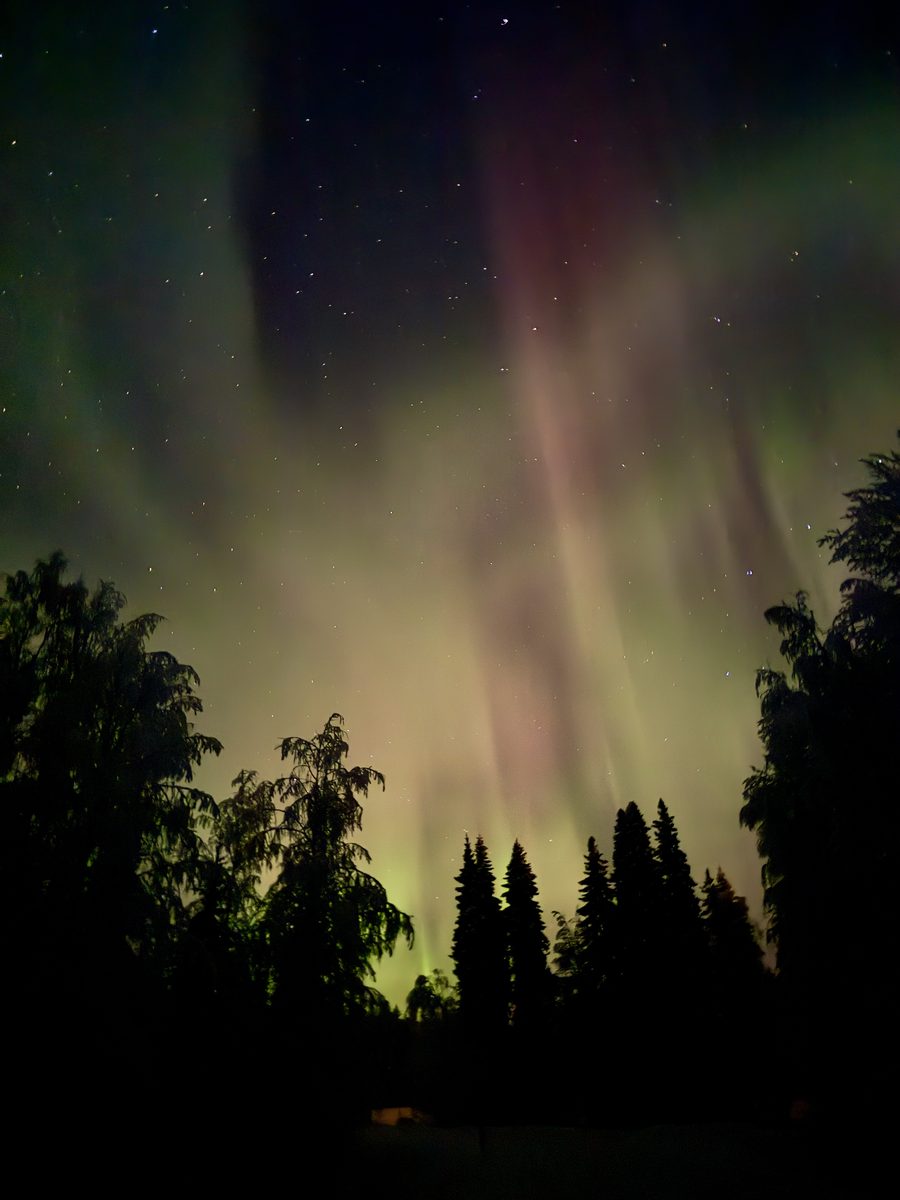
Finnish Lapland · the aurora blazes electric green through snow-covered pines
How to Find the Northern Lights
Patience and planning are your two most important tools.
Monitor the KP Index
The KP index (0–9) measures geomagnetic activity. KP 3+ is visible at 65°N+ in perfect conditions. KP 5+ is spectacular and visible across Scandinavia, Iceland, and even northern Europe.
- Space Weather Prediction Center (NOAA) for hourly forecasts
- My Aurora Forecast app, which sends alerts when KP spikes
- Aurora Borealis Forecast app (excellent UI)
- Check 27-day solar rotation forecasts for trip planning
Chase Clear Skies
The aurora can be raging while you see nothing because clouds are the aurora hunter's true enemy. Always layer aurora forecasts with cloud cover maps.
- Yr.no, the best Norwegian/Nordic cloud cover app
- Clear Outside app for localized cloud and astronomy data
- Ventusky for animated cloud layers over an hour-by-hour timeline
- Be willing to drive 1–2 hours to chase clear sky windows
Escape Light Pollution
City lights will wash out a KP 2–3 display completely. Even a 20-minute drive changes everything.
- Use Light Pollution Map (lightpollutionmap.info) to plan escapes
- Dark sky preserves in Iceland, Norway, and Finnish Lapland
- Boat tours put you on open water with zero horizon obstruction
- Go out after midnight for less traffic and cleaner skies
Timing & Patience
The aurora is most active around geomagnetic midnight, which varies by longitude. Displays typically peak between 10 PM and 2 AM local time.
- Book 5 to 7 nights minimum so you have flexibility around the weather
- Equinox periods (March, September) have elevated activity
- New moon periods give the darkest skies
- Don't give up if night one is cloudy. Persistence wins every time!
Book with an Expert
Aurora trips require logistics that go wrong in very specific ways: wrong season, wrong hotel, missed excursion windows. A travel advisor who has done this trip removes every one of those risks.
- Advisor-exclusive hotel amenities (upgrades, credits, early check-in)
- Real-time itinerary adjustments when cloud cover shifts
- Pre-vetted excursion operators and aurora-wake services
- One point of contact before, during, and after your trip
When Clouds Roll In
Every aurora trip has at least one cloudy night. What separates a great trip from a disappointing one is having a contingency plan ready to execute.
- Drive toward the nearest clear sky window. Check Yr.no hourly
- Reindeer sleighs and snowmobiles run whatever the sky is doing
Capture the Lights
A phone won't do justice to the aurora. These settings will.
Recommended Camera Settings
Pro Shooting Tips
- Bring a sturdy tripodthis is non-negotiable for any exposure over 1/2 sec. Carbon fiber handles the cold better than aluminum.
- Wide angle lens is king14mm to 20mm is the sweet spot for capturing the full arc of the aurora and landscape together. 24mm works but you may miss width on bigger displays.
- Spare batteries are essentialcold drains batteries in under an hour. Keep extras in your inner breast pocket close to body heat.
- Focus in daylight firstset focus to infinity on a distant object before dark, then switch to manual so autofocus doesn't hunt all night.
- Include a foregrounda frozen lake, snowy trees, or a lonely cabin transforms an aurora shot from ordinary to extraordinary.
- Shoot tighter for fast aurorasif the lights are dancing and moving fast, shorten your shutter speed and push ISO to freeze the motion.
- Phone tipiPhone 14+ Night Mode and Google Pixel Night Sight can surprise you on a strong KP 6+ display. Worth a try as backup.
Best Time to Visit
Aurora visibility depends on darkness, which means planning around the season is critical.
| Month | Aurora visibility |
|---|---|
| Jan | Good |
| Feb | Prime |
| Mar | Prime |
| Apr | Possible |
| May | Midnight sun |
| Jun | Midnight sun |
| Jul | Midnight sun |
| Aug | Possible |
| Sep | Prime |
| Oct | Good |
| Nov | Good |
| Dec | Good |
Pro tip: February and March give you dark nights plus enough daylight for activities. September has the equinox behind it, which makes displays more intense.
Winter Activities to Round Out Your Trip
The daytime is yours to explore and the Arctic has no shortage of bucket-list experiences to fill it.
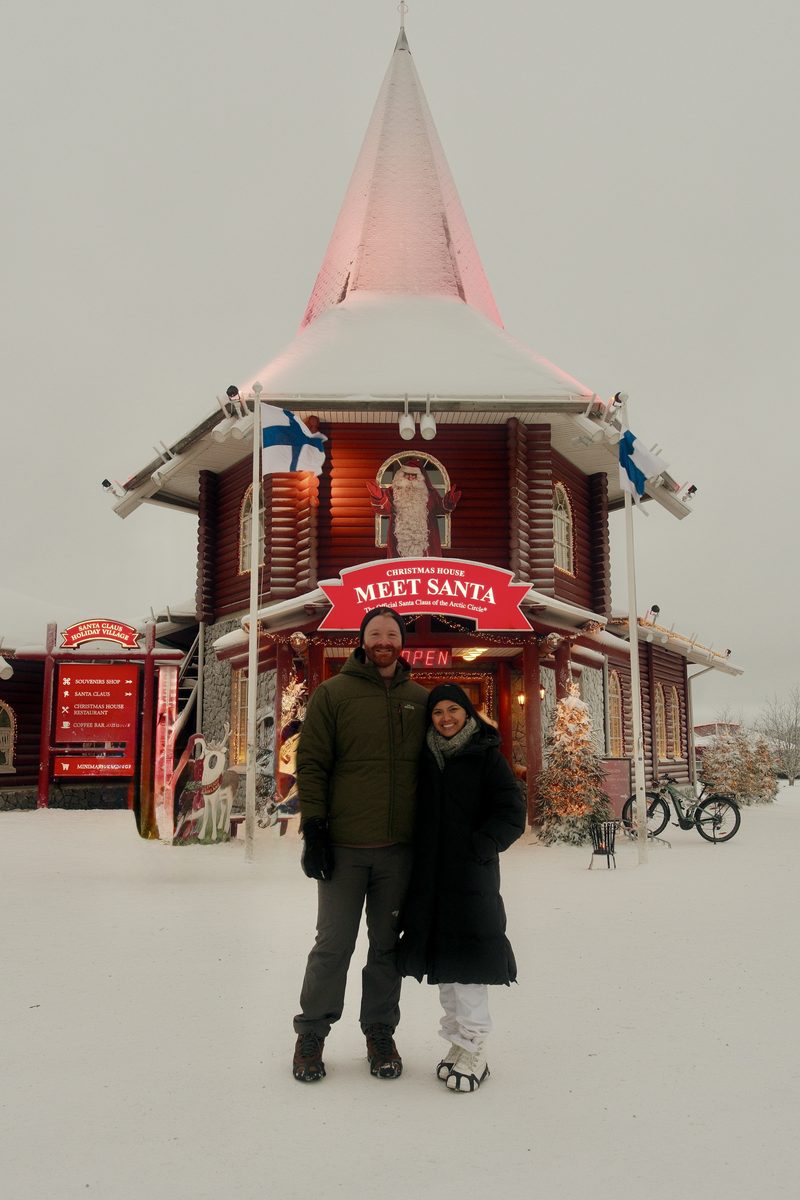
Santa Claus Village
The official hometown of Santa Claus. Meet the man himself, receive a personalized certificate from the Arctic Circle, and let children experience pure magic.
Rovaniemi, Finland
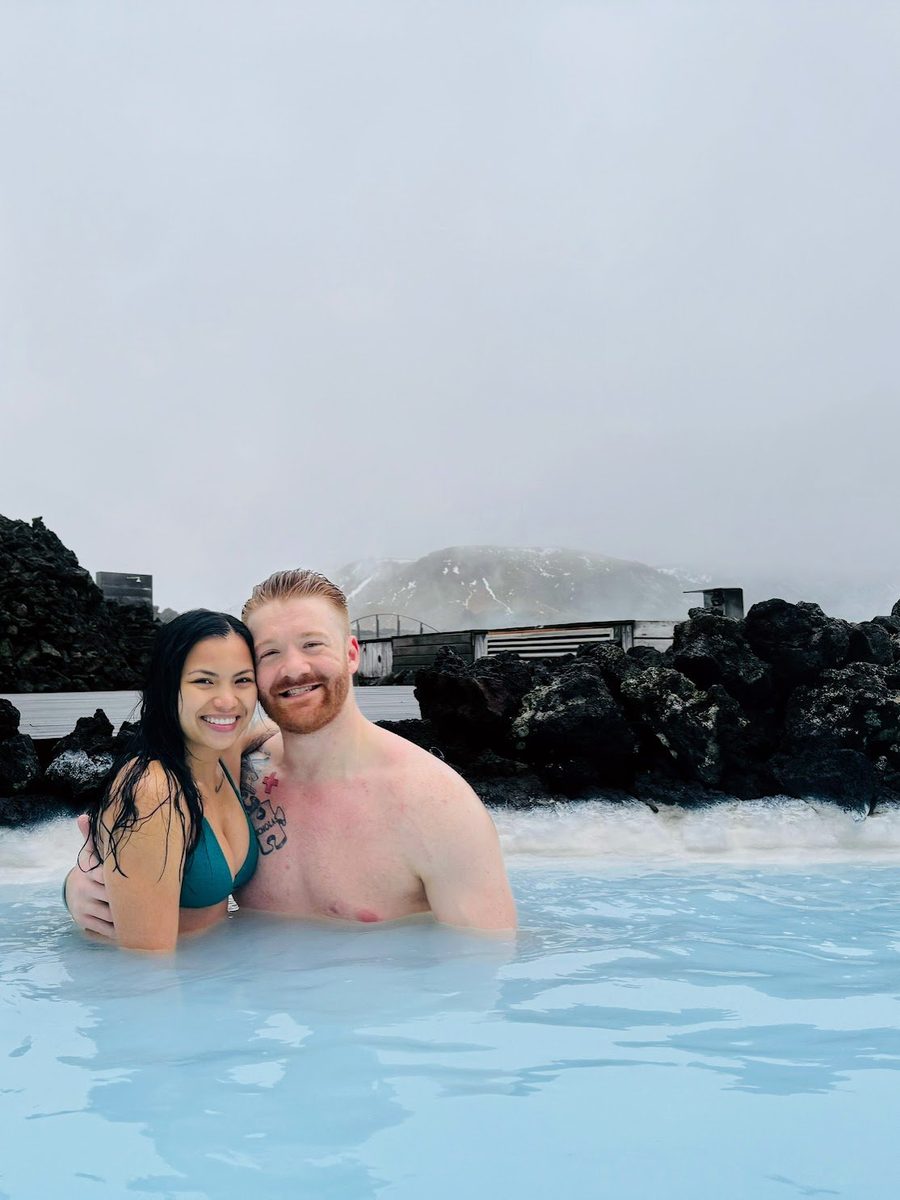
Blue Lagoon · Iceland
Geothermal Bathing
Soak in the Blue Lagoon's milky silica waters and grab a mud mask at the swim-up bar in the middle of the pool. I did the mask on my last visit and my skin had never felt so smooth. Go first thing in the morning, before the crowds arrive.
Iceland
Reindeer Safari & Sleigh Ride
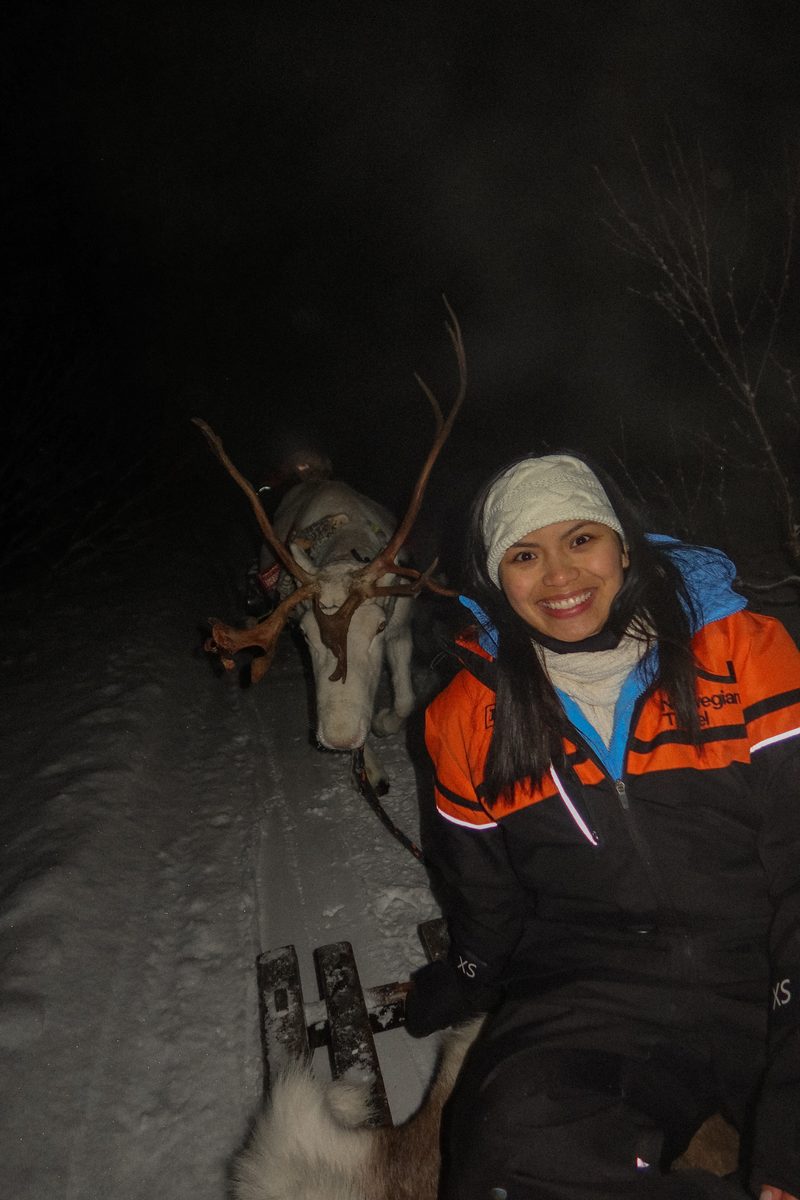
Glide through snow-silent forests in a traditional reindeer-drawn pulkka sleigh. Visit a Sámi reindeer farm and feed the herd by hand.
Rovaniemi & Tromsø
Snowmobile Safari
Ride into the wilderness under your own power. Reach remote frozen lakes and mountain tops that guided tours can't access. The best way to feel truly free in the Arctic.
All Three Destinations
Fjord & Whale Safari
Humpback and orca whales feed in the fjords of northern Norway in winter. Combine a whale watching cruise with an evening aurora boat excursion.
Tromsø, Norway
Glacier & Volcano Hiking
Walk on a glacier, enter a volcanic ice cave glowing electric blue, or hike to the top of a caldera. Iceland is the only place on Earth offering all of this in one trip.
Iceland
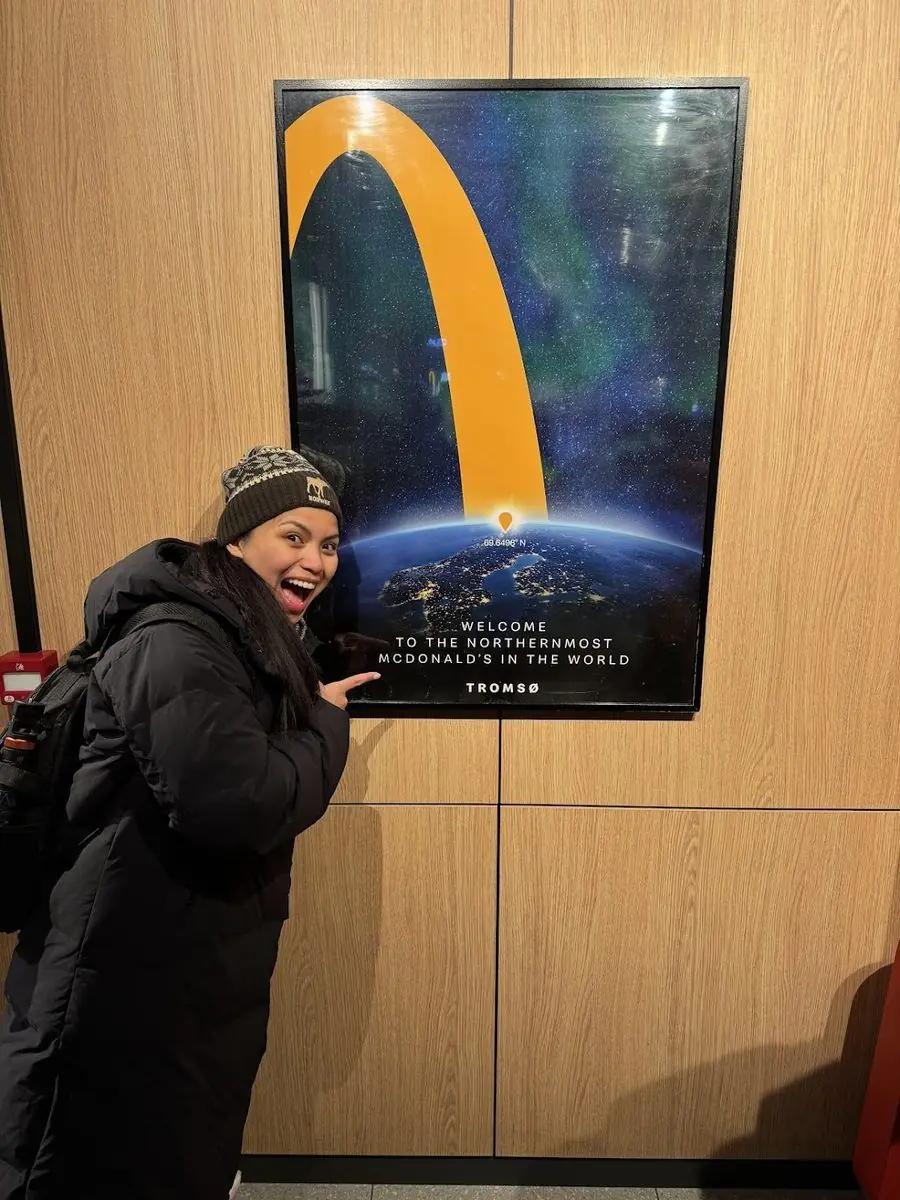
World's Northernmost McDonald's · Tromsø

Santa's Official McDonald's · Rovaniemi
Two Legendary McDonald's
We make it a tradition to try McDonald's in every country we visit, so of course these two were on the list. Tromsø has the world's northernmost McDonald's, and the one at Santa Claus Village in Rovaniemi is decorated like nowhere else we've been. Worth the detour for both.
Tromsø, Norway & Rovaniemi, Finland
Frequently Asked
What are my odds of actually seeing the aurora?
No one can promise a sighting, and anyone who does is selling something. What I can do is stack the odds: the right month, enough nights, dark-sky locations, and hotels that wake you when the lights appear. Plan on three nights minimum, more if you can.
When should I go?
The season runs roughly late September through late March. I've chased the lights in January, December, and November. Deep winter gives you the longest dark nights, while the shoulder months bring milder weather and easier driving.
Which destination should I pick?
Tromsø for fjords and a lively small city, Iceland if you want to drive and explore between sightings, Rovaniemi for snow-quiet forests and Santa if you're traveling with kids. All three deliver. They just feel different.
What does a trip like this cost?
Most aurora trips I plan start around $5,000 per person and move with destination, cabin type, and how many excursions you add. Reach out and I'll price your version of the trip.
You Might Also Like
Let's Plan Your
Aurora Adventure
As your dedicated travel advisor, I'll handle every detail: from glass igloo reservations to real-time itinerary adjustments when the forecast changes. And when you book through me, you get perks you simply can't get booking direct or through third-party sites: room upgrades, early check-in, resort credits, exclusive amenity packages, and my personal support before, during, and after your trip. All you do is look up.
Start Planning Your Journey